THIS STARTED WITH A FEELING I COULDN’T FIND ANYWHERE ELSE.
started with a simple frustration: I couldn’t find enough things that represented Persian culture in a way that felt like me.
Not just Persian-inspired. Not souvenirs. Not something that felt like it belonged in the past.
Something Persian that I would actually wear.
HI, I’M NIKA.
British-Iranian + Pakistani. London. Computer Science. Professional side-quest starter.
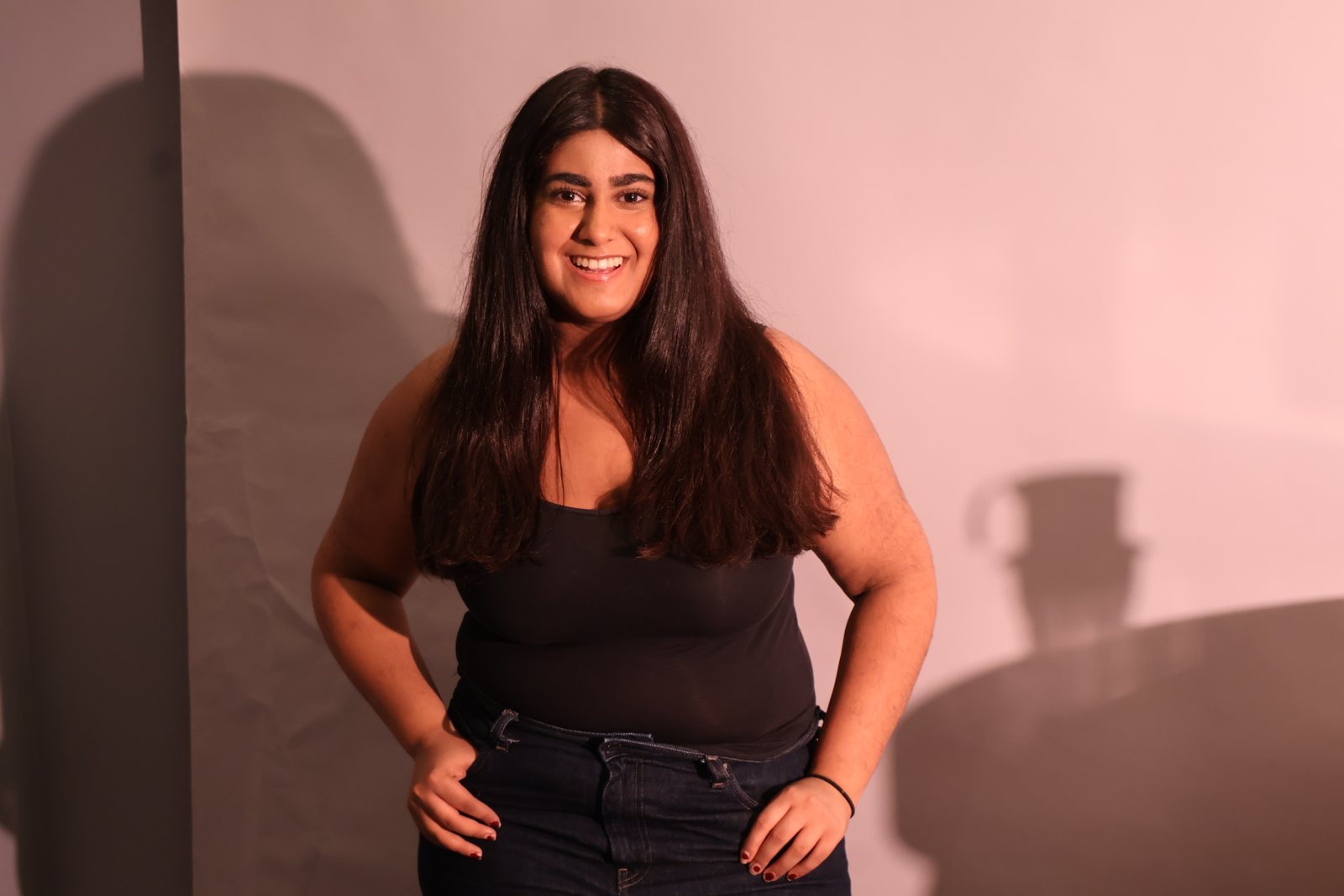
I’m Nika, a 19-year-old British-Iranian and Pakistani founder from London, a Computer Science student, and the person behind .
I’ve always been someone who creates things. Sometimes that’s software, sometimes art, and sometimes it’s a business idea I probably started when I was supposed to be doing something else.
Growing up across different cultures made me especially interested in what happens to identity when it travels. What gets preserved, what changes, and what new generations make their own.
came from the Persian side of that experience.
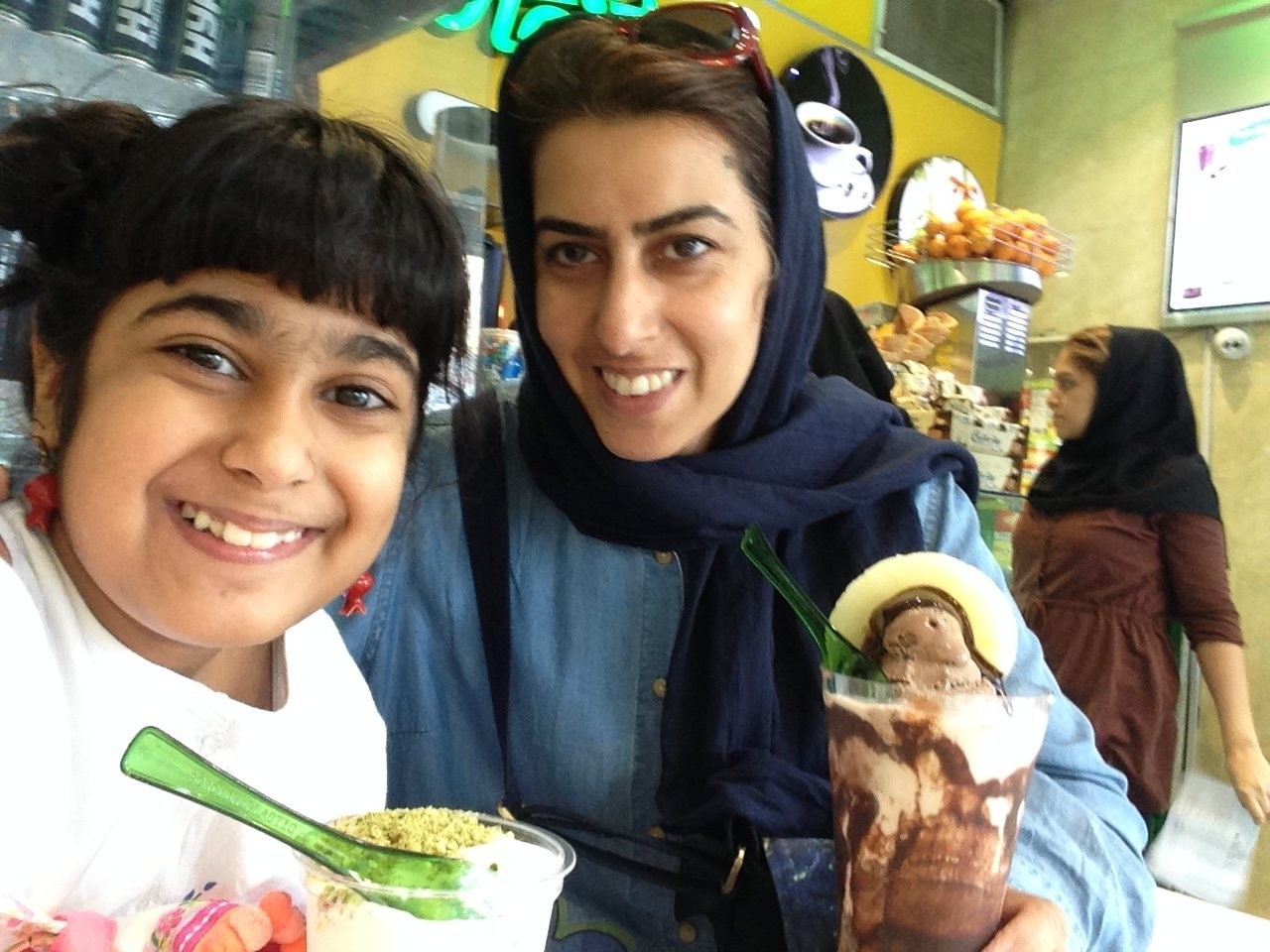
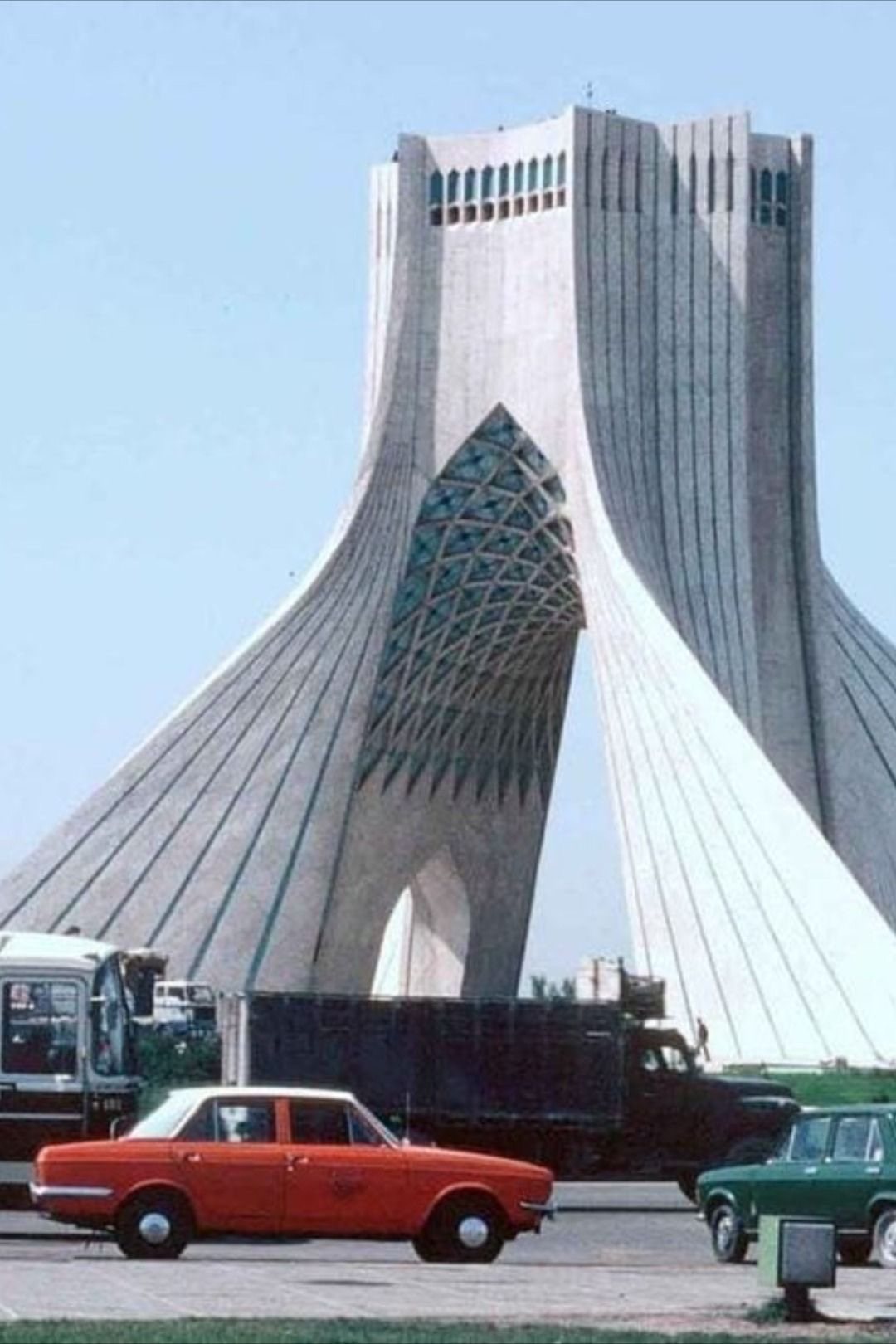
I HAVEN’T BEEN TO IRAN SINCE 2017.
Part of me genuinely feels like I left my heart there.
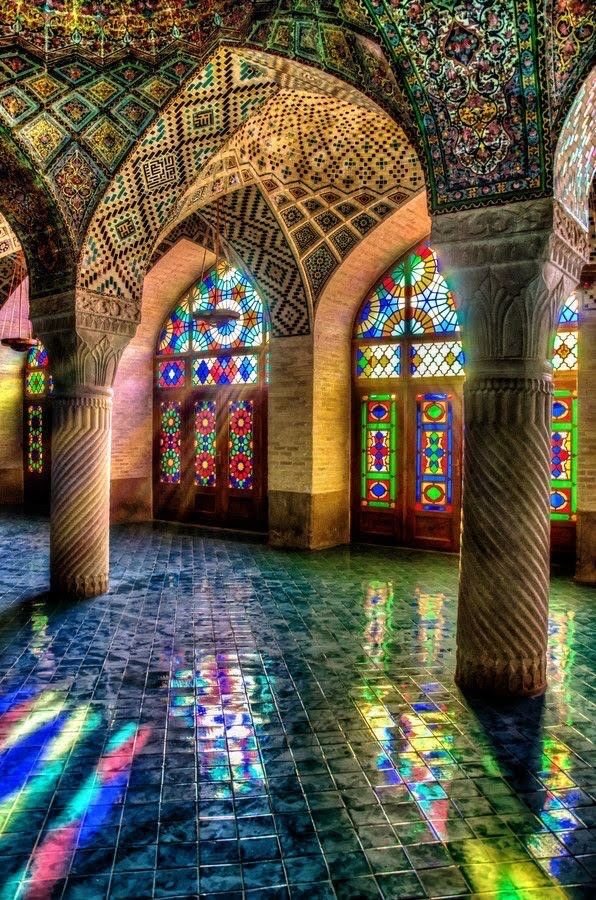
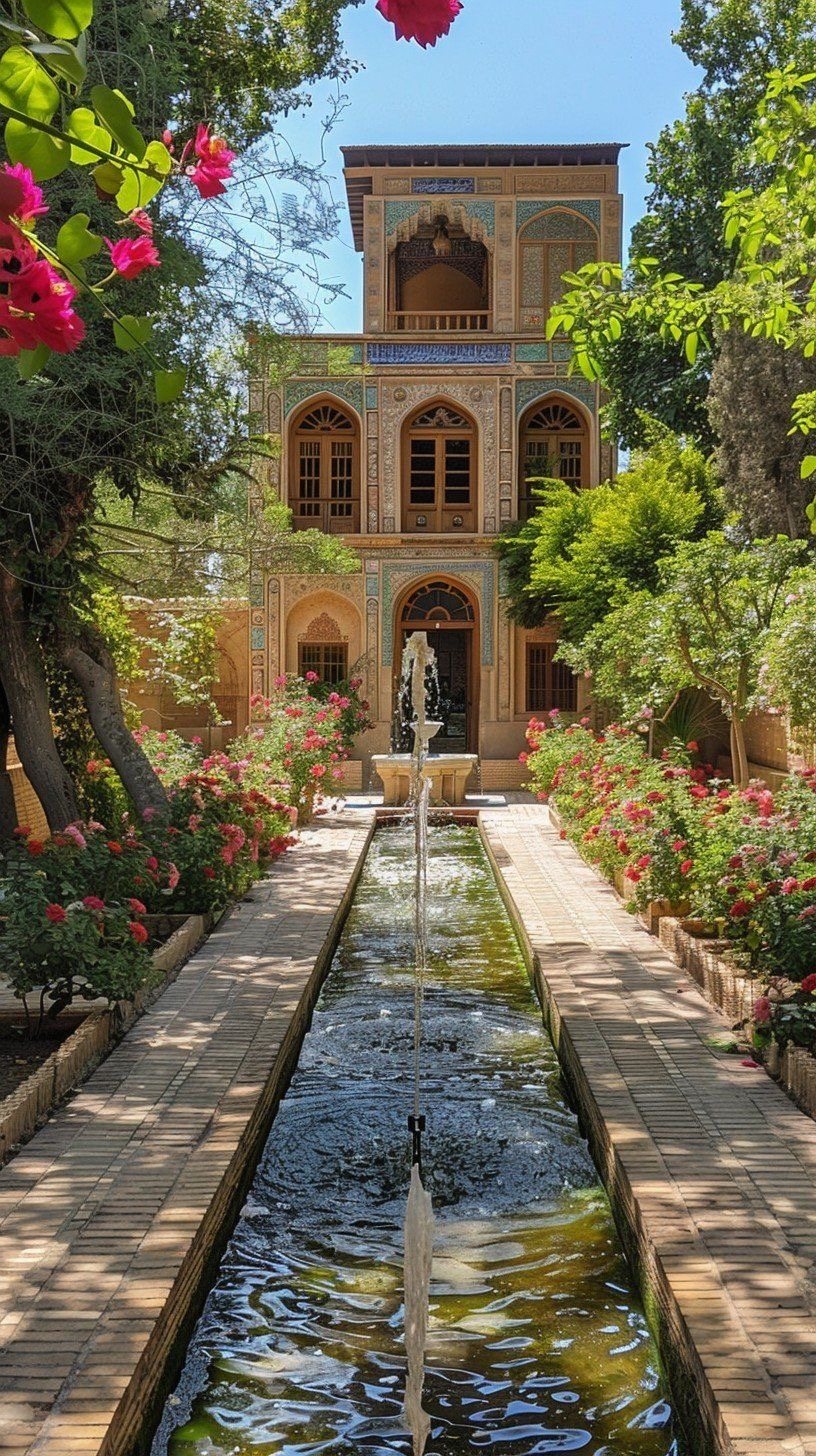
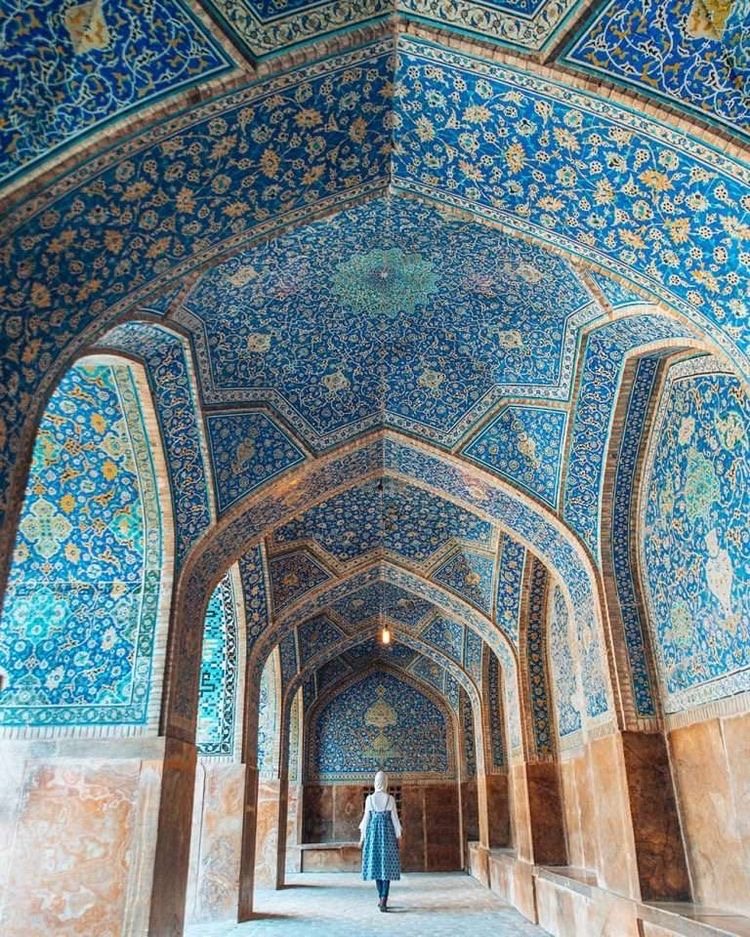
It’s strange to feel so attached to somewhere you haven’t physically been in years, but so much of my connection to Iran now exists through the culture that travelled with us.
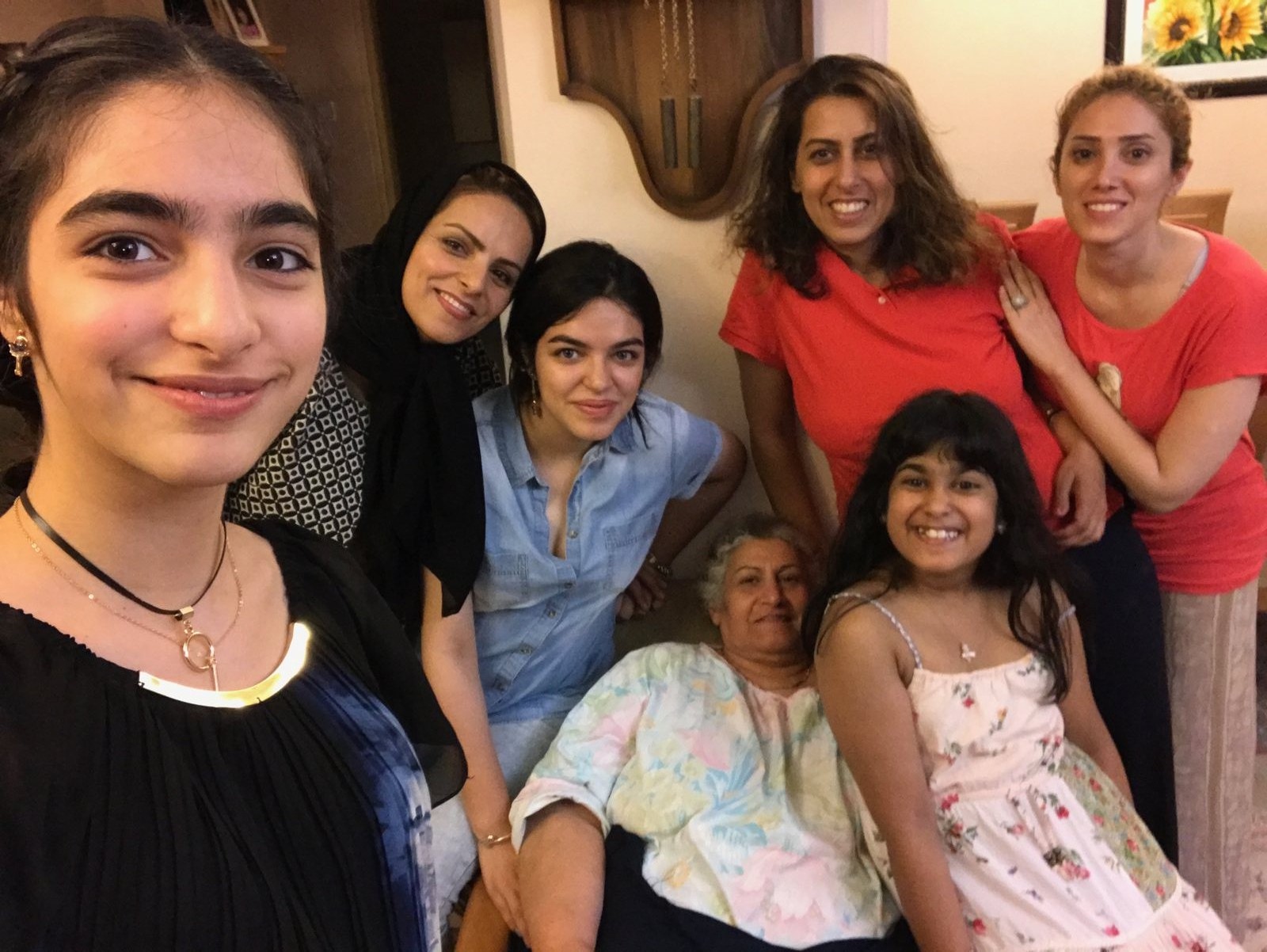
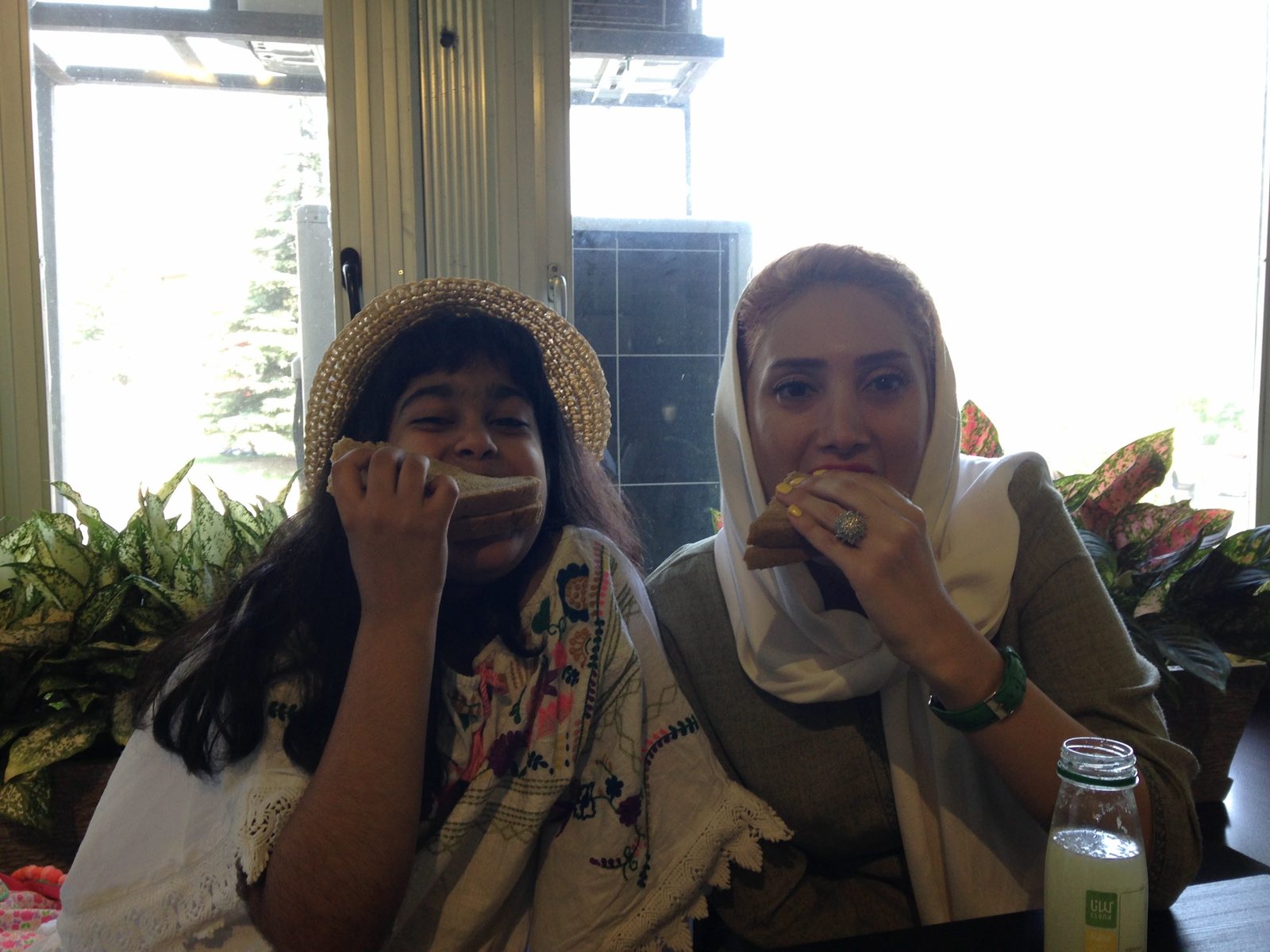
I LOVE A MEHMOONI.
The slightly chaotic Persian gatherings, the food, the music, everyone talking, people insisting you eat more when you’ve already eaten enough for a family of four.
That feeling of being surrounded by people and somehow knowing exactly what kind of room you’re in.
“I literally just ate” “doesn’t matter”
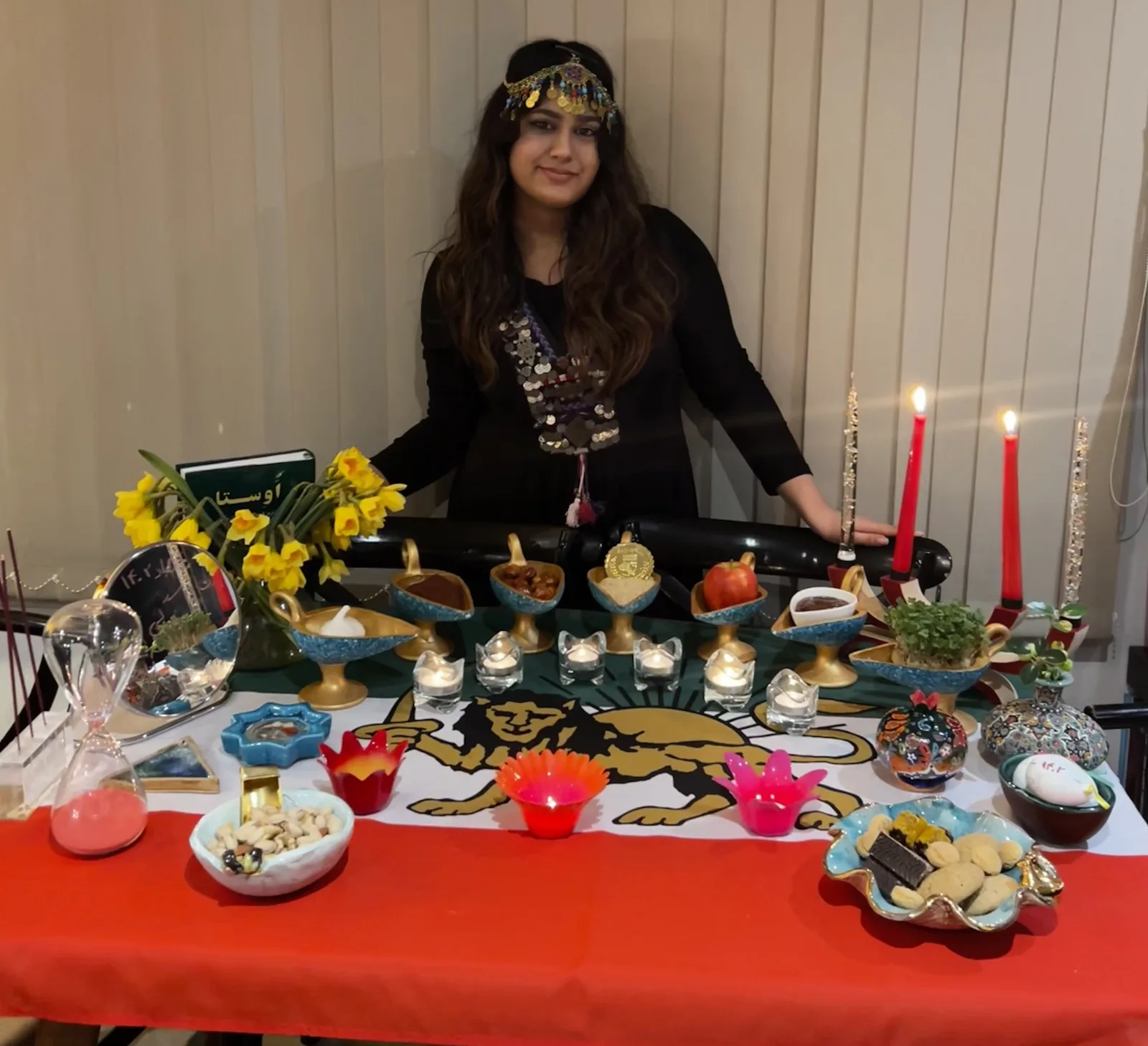
THE RUGS UNDER OUR FEET.
THE FOOD ON THE TABLE.
THE MUSIC PLAYING SOMEWHERE IN THE BACKGROUND.
THE LANGUAGE.
THE LITTLE OBJECTS AROUND PERSIAN HOMES.
THE JOKES YOU DON’T NEED TO EXPLAIN.
THE HABITS YOU INHERIT WITHOUT KNOWING WHERE THEY CAME FROM.
THAT’S SO PERSIAN.
Growing up in London as part of the Persian diaspora, my relationship with Iran was never confined to the country itself.
Persian culture followed us.
And I started wondering why I wasn’t seeing more of that world represented in the things my generation actually wears, shares and buys.
IRAN THE WORLD SOMETHING NEW
The Persian diaspora is still relatively young.
Much of the modern Iranian diaspora grew following the 1979 revolution and later waves of migration, meaning many Persians abroad are immigrants themselves or only one or two generations removed from Iran.
My own mixed background made this particularly interesting to me.
I’m also Pakistani, and growing up in Britain meant I could see another diaspora culture that has had more generations to establish itself here.
I’ve seen British South Asian identity develop into its own creative world. There are fashion brands, artists, events, humour, music and cultural references that don’t only represent where someone’s family originally came from. They also represent what happened to that culture after it travelled.
You can be proudly South Asian while creating something unmistakably British at the same time.
That fascinated me.
Because Persian culture has travelled too.
And my generation is still figuring out what that looks like.
I SAW IT IN A PRINT AT A FAIR.
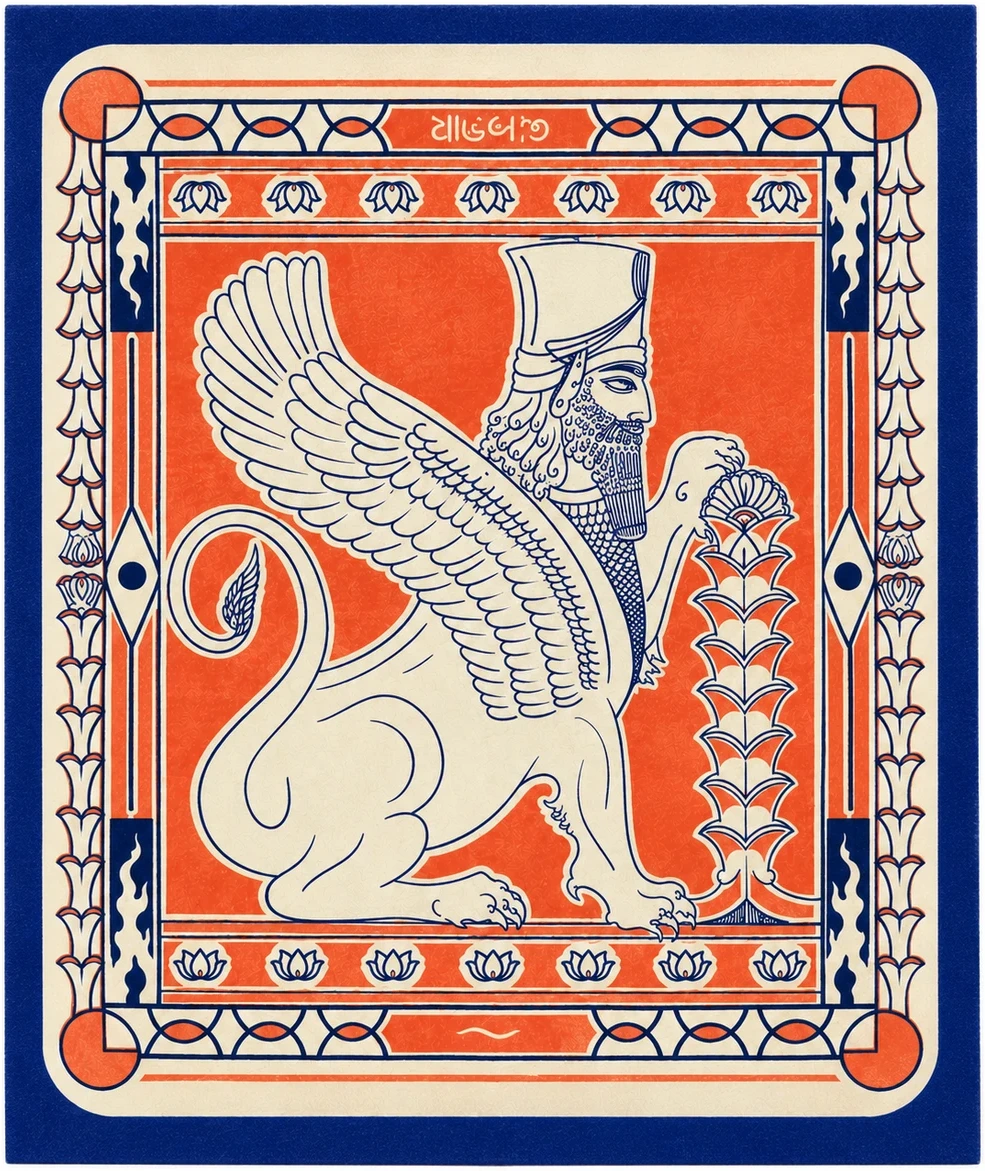
PRINT BY DHRUTI MODHA · @samsara.bazaar ON INSTAGRAM · SHOP HER WORK ON ETSY
“I bought this at a fair and couldn’t stop thinking about it.”
I went to a small-business fair and did what I usually do when surrounded by independent artists: spent far more money than I intended to.
I came home with a pile of prints and other pieces because I genuinely loved seeing people turn their cultures, ideas and identities into things other people could take home.
But one print stayed with me for a different reason.
It had been created by Dhruti Modha , a South Asian artist, but its inspiration traced back to ancient Persia.
Centuries ago, Zoroastrians migrated from Persia to India, where their descendants became known as the Parsi community. The artist had drawn from that shared Persian and Parsi history to create something that belonged to both stories.
And I loved that.
A culture had travelled. It had met another culture. Generations passed.
And hundreds of years later, someone was still creating something from that connection.
It made me think about differently.
CULTURE DOESN’T DISAPPEAR
WHEN IT LEAVES HOME.
IT CHANGES.
It mixes with wherever you grow up.
It gets passed from grandparents to parents to children.
Some traditions survive exactly as they were.
Others become jokes, clothes, music, art, slang, memories and little rituals.
And eventually, a new generation inherits all of it and decides what to do with it.
MADE OF MEMORY + NEW IDEAS
SOMETHING OLD.
SOMETHING NEW.
Anar, rewritten in code.
IS MY ANSWER TO THAT.
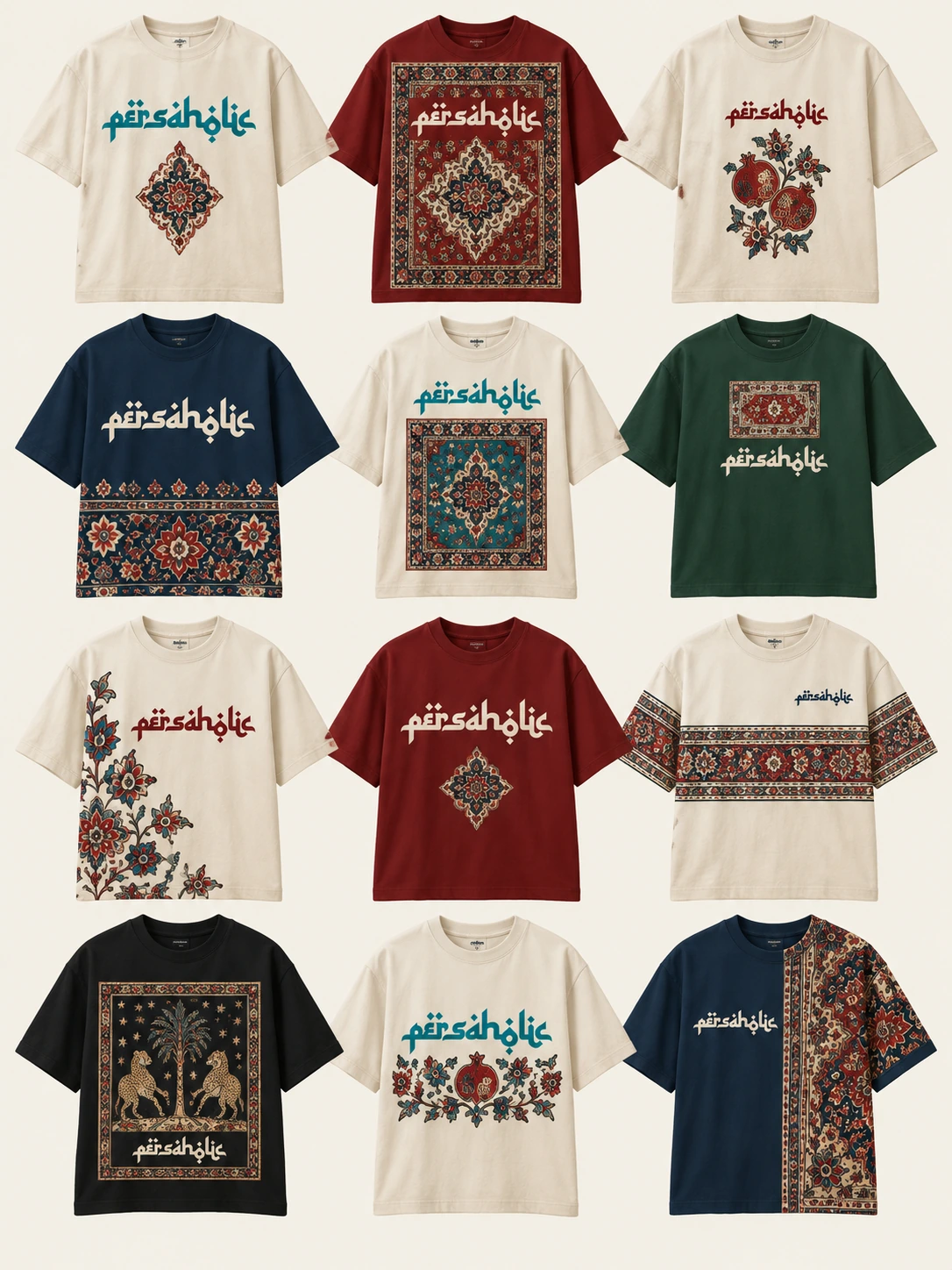
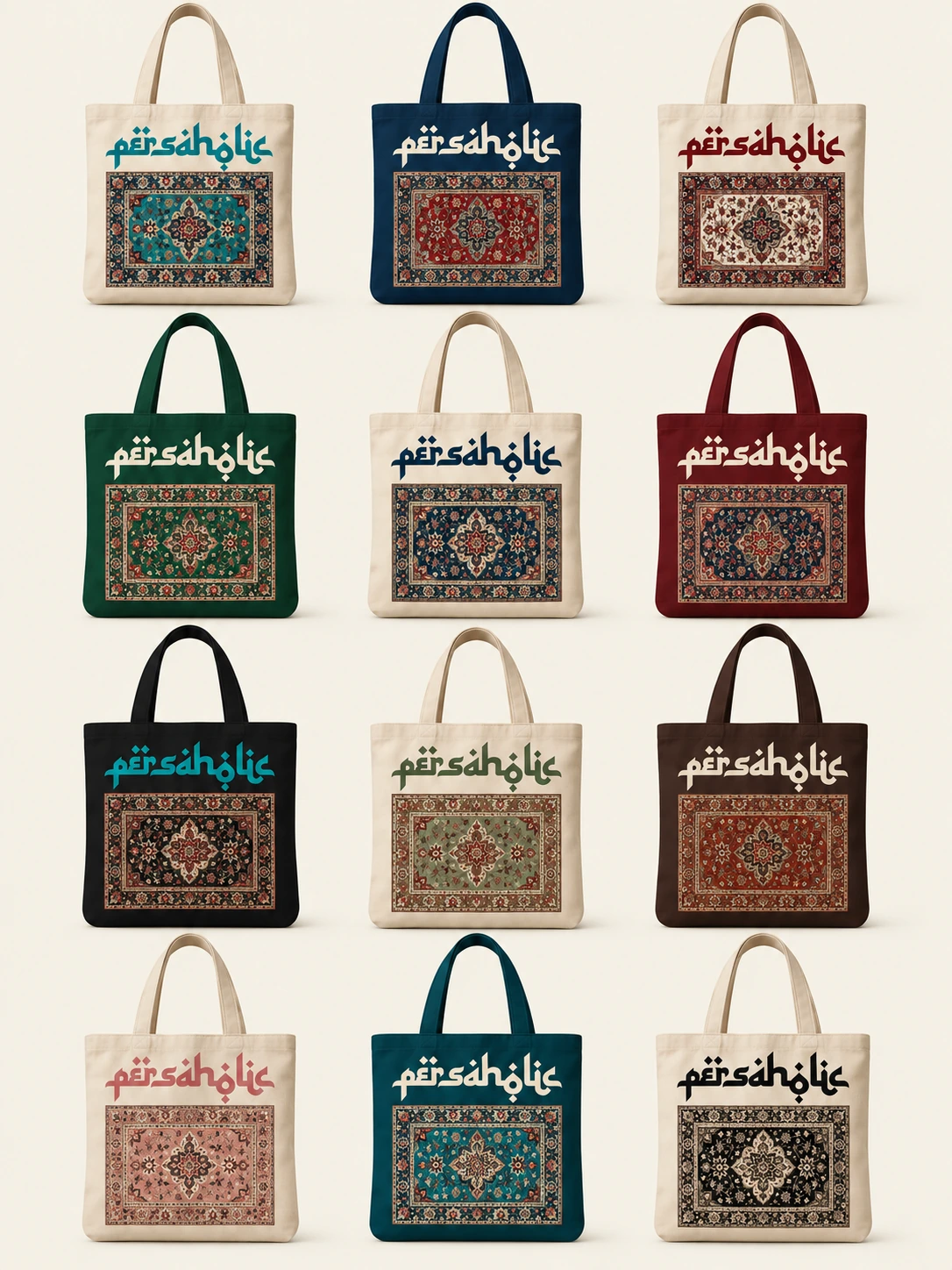
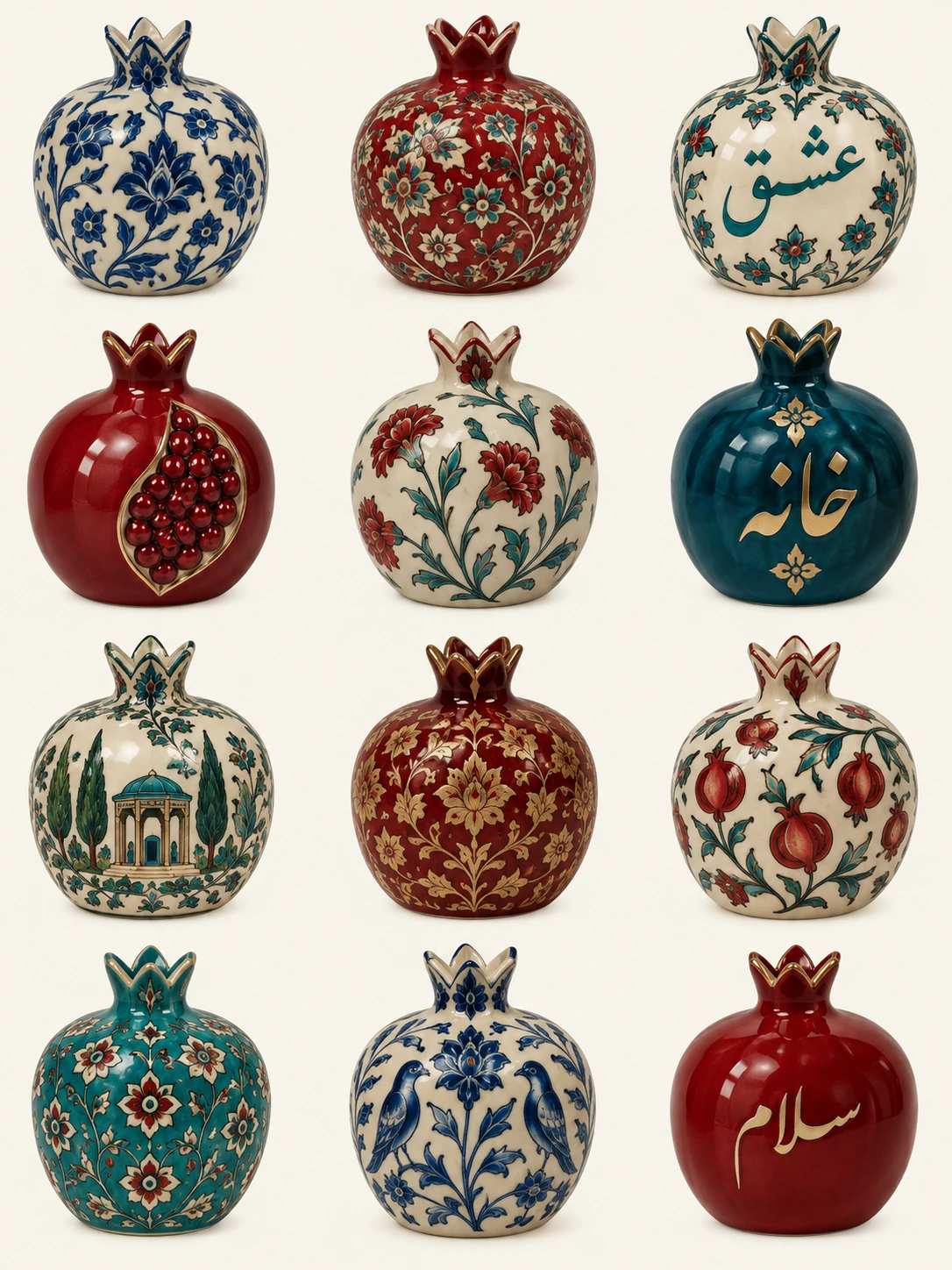
We’re taking the things Persians recognise, our rugs, symbols, objects, humour, history, family habits and cultural references, and putting them into a world that feels contemporary.
Sometimes seriously.
Usually with a little bit of humour.
Because Persian culture doesn’t need to be frozen in time to be respected.
THIS ISN’T ABOUT PUTTING PERSIAN SYMBOLS ON THINGS.
Anyone can print a Persian motif onto a T-shirt.
is about the feeling behind it.
That tiny moment of recognition when you see something and immediately understand the reference.
When your mum recognises the meaning behind your shirt before your friend does.
When something reminds you of your grandparents’ house.
When another Persian sees what you’re wearing from across the room and just gets it.
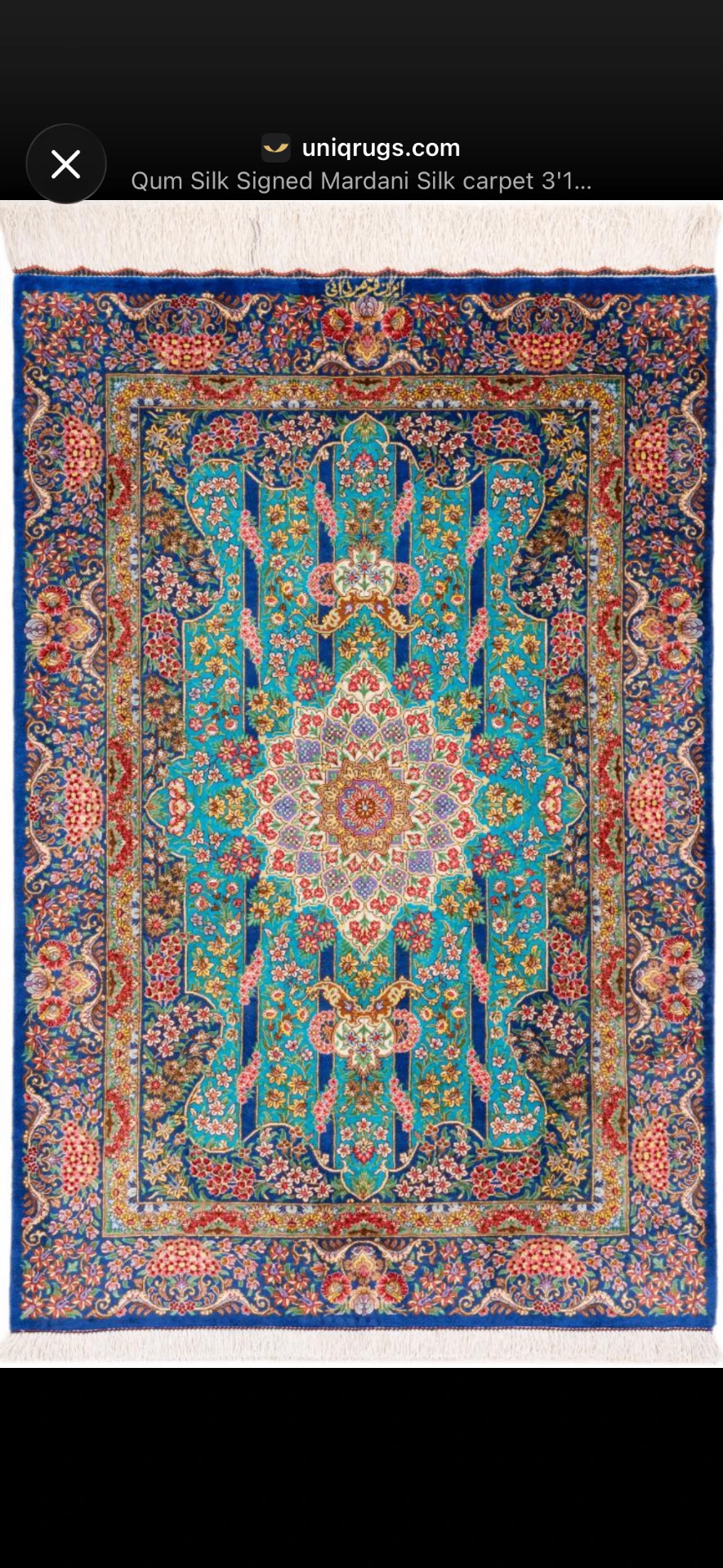
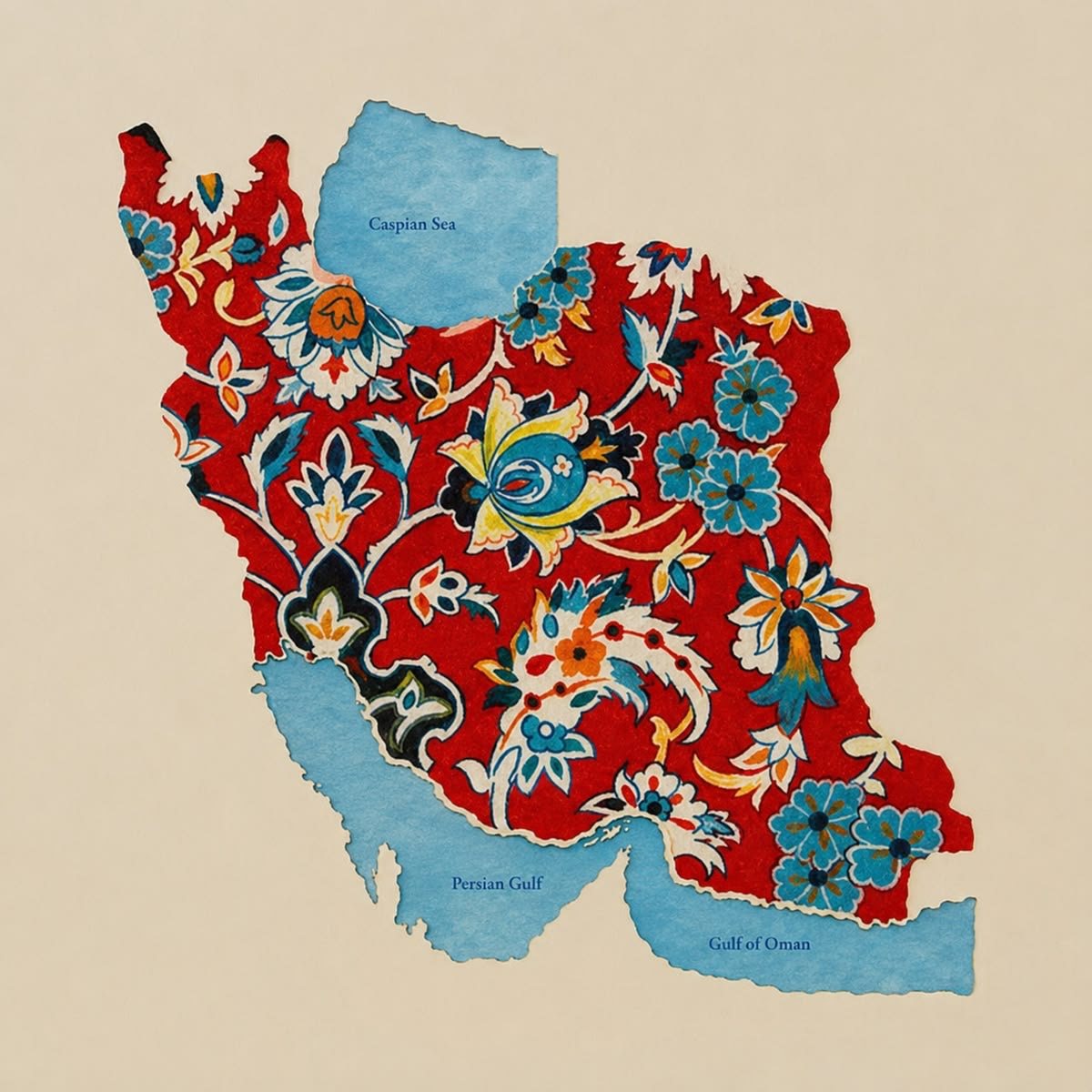
THERE’S ROOM FOR ALL OF IT.
And you don’t have to have grown up in Iran to feel that connection.
You might speak fluent Persian. You might understand it but answer your parents in English.
You might visit Iran every year. You might be like me and not have been back in years. You might never have been at all.
You might know exactly where your family comes from, or you might still be figuring out what your relationship with Persian culture looks like.
There’s room for all of it.
Because distance doesn’t determine how Persian you are.
HOW ARE YOU FEELING RIGHT NOW?
isn’t trying to define what being Persian should look like.
We’re interested in what it already looks like, especially after it travels.
The old alongside the new.
Tehran alongside London, Los Angeles, Toronto, Paris and everywhere else Persians have made a home.
Heritage without being stuck in the past.
Nostalgia without turning our culture into a museum.
Something your grandparents can recognise and something you would actually want to wear.
I started because I wanted that for myself.
Because I haven’t been back to Iran since 2017, but Iran never really stopped being part of my everyday life.
Maybe that’s part of what diaspora is.
You leave a place, or you’re born somewhere else entirely, but somehow pieces of it follow you.
is about what we do with those pieces.